
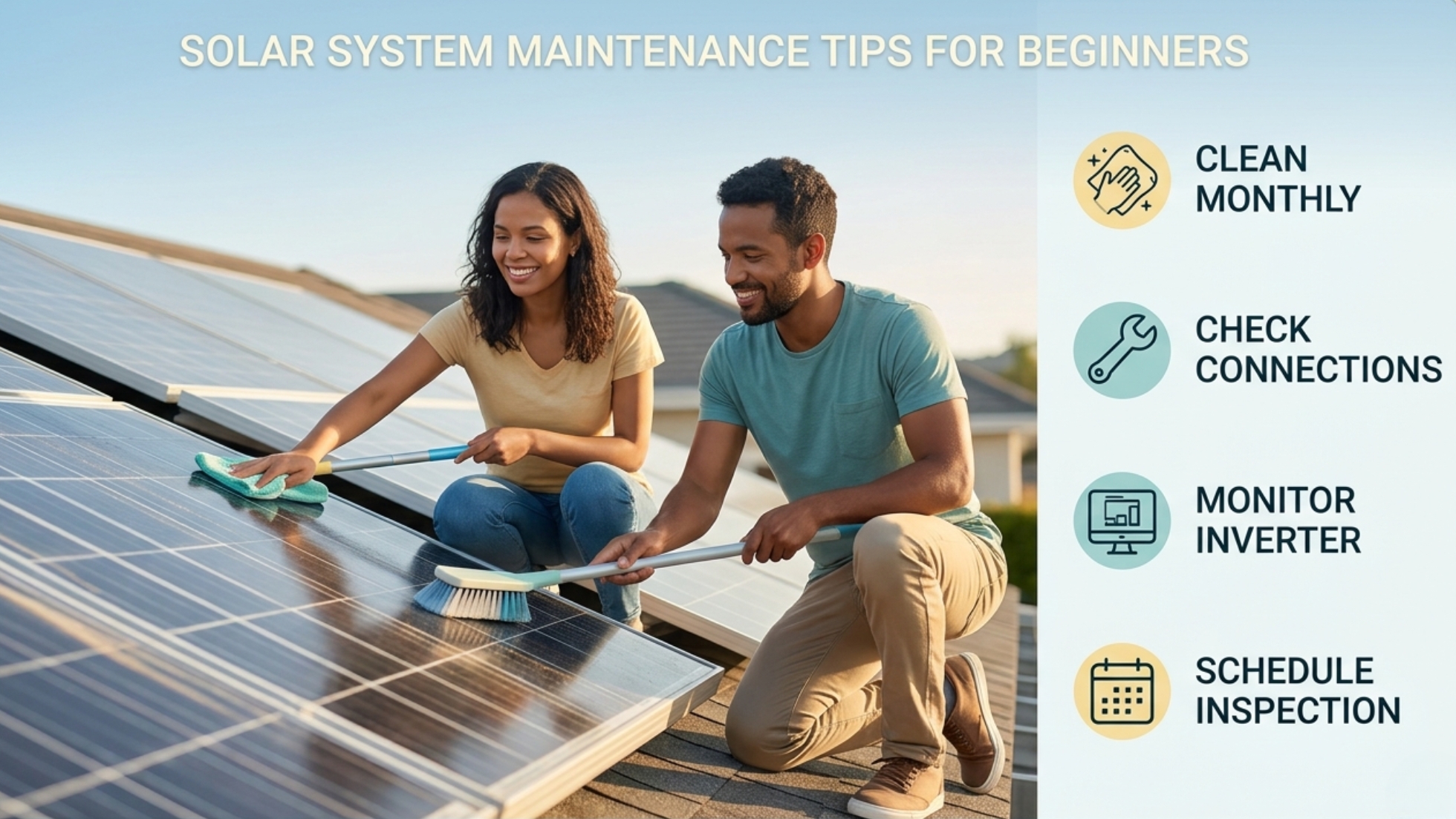
Solar energy has become one of the most popular and cost effective solutions for reducing electricity bills and overcoming power shortages in Pakistan. From residential homes to commercial buildings and industrial facilities, solar systems are now widely used for reliable and sustainable energy production.
Installing a solar system is a long term investment, and like any other electrical setup, it requires proper maintenance to ensure maximum performance and durability. Many beginners assume that solar systems are completely maintenance free, but regular care and inspection are essential for maintaining efficiency and preventing costly problems.
Proper solar system maintenance helps improve energy production, extend equipment lifespan, reduce repair costs, and ensure safe operation. Even simple maintenance practices can make a significant difference in the overall performance of your solar setup.
In this guide, we will cover essential solar system maintenance tips for beginners, explain why maintenance is important, and help you understand how to keep your solar system operating efficiently for years.
WHY SOLAR SYSTEM MAINTENANCE IS IMPORTANT
Solar panels and related equipment are exposed to outdoor environmental conditions every day. Dust, dirt, rain, heat, humidity, and pollution can affect the performance of the system over time.
Without proper maintenance, solar systems may experience:
- Reduced energy production
- Lower efficiency
- Overheating issues
- Loose electrical connections
- Battery problems
- Inverter faults
- Increased repair costs
Regular maintenance helps ensure that every component of the system operates correctly and safely.
Benefits of proper solar maintenance include:
- Improved solar efficiency
- Higher energy output
- Longer equipment lifespan
- Reduced electricity costs
- Better return on investment
- Early detection of issues
- Increased system reliability
UNDERSTANDING THE MAIN COMPONENTS OF A SOLAR SYSTEM
Before performing maintenance, beginners should understand the basic components of a solar system.
Solar Panels
Solar panels capture sunlight and convert it into electricity.
Inverter
The inverter converts DC electricity generated by solar panels into AC electricity used by household appliances.
Batteries
Solar batteries store excess energy for later use.
Solar Cables
Cables transfer electricity between solar panels, batteries, and the inverter.
Mounting Structure
The mounting structure supports and secures solar panels in place.
Each component plays an important role in the overall performance of the system.
CLEAN SOLAR PANELS REGULARLY
One of the most important maintenance tasks is cleaning the solar panels.
Dust, dirt, bird droppings, leaves, and pollution can accumulate on the surface of solar panels and block sunlight. This reduces the amount of energy the panels can generate.
In areas with high dust levels, solar panel efficiency may decrease significantly if cleaning is neglected.
Tips for Cleaning Solar Panels
- Use clean water and a soft cloth or sponge
- Avoid harsh chemicals and abrasive materials
- Clean panels early in the morning or late in the evening
- Turn off the system before cleaning if required
- Remove leaves and debris carefully
For most residential systems in Pakistan, cleaning solar panels every two to four weeks is usually recommended depending on weather conditions and dust levels.
CHECK FOR SHADING ISSUES
Solar panels perform best when they receive direct sunlight throughout the day.
Over time, trees, buildings, or newly installed structures may create shadows on the panels. Even partial shading can reduce the efficiency of the entire solar array.
Regularly inspect the installation area and ensure that:
- Trees are trimmed
- Panels remain exposed to sunlight
- No new objects block sunlight
Maintaining clear sunlight exposure helps maximize energy production.
INSPECT SOLAR CABLES AND CONNECTIONS
Solar cables and electrical connections should be checked regularly for signs of damage or wear.
Damaged cables can lead to:
- Energy loss
- Voltage fluctuations
- Short circuits
- Fire hazards
- Reduced system efficiency
What to Look For
- Loose connections
- Cracked insulation
- Burn marks
- Corrosion
- Exposed wires
Always use high quality solar cables designed for outdoor conditions and UV resistance.
If you notice any serious electrical issues, contact a qualified solar technician immediately.
MONITOR INVERTER PERFORMANCE
The inverter is one of the most important parts of a solar system because it manages the conversion of electricity.
Most modern inverters include digital displays or monitoring systems that show:
- Power generation
- System performance
- Error warnings
- Voltage information
Beginners should regularly check the inverter display to ensure the system is operating normally.
Common Warning Signs
- Error messages
- Unusual noises
- Frequent shutdowns
- Reduced energy production
- Overheating
If the inverter shows warning indicators, professional inspection may be required.
MAINTAIN SOLAR BATTERIES PROPERLY
For systems that include battery storage, battery maintenance is extremely important.
Poor battery maintenance can reduce storage capacity and shorten battery lifespan.
Battery Maintenance Tips
- Keep batteries in a cool and ventilated area
- Avoid overcharging
- Check battery terminals for corrosion
- Maintain proper water levels in applicable battery types
- Keep battery surfaces clean and dry
Different battery technologies may require different maintenance procedures, so always follow manufacturer guidelines.
CHECK MOUNTING STRUCTURES AND PANEL POSITION
Solar panels are mounted outdoors and exposed to wind, rain, and environmental stress.
Inspect mounting structures regularly to ensure:
- Bolts remain tight
- Panels are securely attached
- No rust or corrosion is present
- The panel angle remains correct
Loose mounting structures can damage panels and reduce safety during strong winds or storms.
MONITOR ENERGY PRODUCTION
Tracking energy production helps identify performance issues early.
If your solar system suddenly produces less electricity than usual, there may be an underlying problem such as:
- Dirty panels
- Cable damage
- Inverter faults
- Battery issues
- Shading problems
Many modern solar systems include mobile apps or monitoring software that allow users to track system performance in real time.
Monitoring energy output regularly helps ensure optimal efficiency.
PROTECT YOUR SOLAR SYSTEM DURING EXTREME WEATHER
Weather conditions can affect solar system performance and safety.
During Heavy Rain
- Inspect drainage around the installation
- Ensure no water leakage affects electrical components
During Storms
- Check mounting structures after strong winds
- Inspect panels for cracks or damage
During High Temperatures
- Ensure proper airflow around inverters and batteries
- Prevent overheating of electrical equipment
Protecting your solar system from weather damage helps maintain long term reliability.
SCHEDULE PROFESSIONAL INSPECTIONS
While beginners can handle basic maintenance tasks, professional inspections are still important.
A qualified solar technician can:
- Test electrical performance
- Inspect wiring and safety systems
- Detect hidden issues
- Ensure optimal efficiency
- Perform technical repairs
Professional inspections are generally recommended at least once or twice a year.
Regular servicing helps prevent major problems and extends the lifespan of the system.
COMMON SOLAR SYSTEM MAINTENANCE MISTAKES TO AVOID
Many beginners accidentally reduce system performance by making maintenance mistakes.
Using Harsh Cleaning Materials
Rough brushes and chemicals can damage solar panel surfaces.
Ignoring Small Problems
Minor issues can become expensive repairs if left unresolved.
Walking Directly on Solar Panels
This can crack or damage the panels.
Delaying Professional Repairs
Electrical issues should always be handled by trained technicians.
Neglecting Monitoring
Failing to monitor system performance may allow hidden problems to continue unnoticed.
Avoiding these mistakes helps maintain system safety and efficiency.
HOW OFTEN SHOULD SOLAR SYSTEMS BE MAINTAINED?
Maintenance frequency depends on:
- Local weather conditions
- Dust levels
- System size
- Installation location
General recommendations include:
- Solar panel cleaning every two to four weeks
- Visual inspections every month
- Inverter monitoring weekly
- Professional inspection every six to twelve months
Regular maintenance schedules help ensure consistent energy production.
BENEFITS OF REGULAR SOLAR SYSTEM MAINTENANCE
Maintaining your solar system properly offers many long term advantages.
Higher Energy Efficiency
Clean and properly functioning systems produce more electricity.
Lower Repair Costs
Early issue detection helps avoid major repairs.
Longer Equipment Lifespan
Proper care protects solar panels, batteries, and inverters.
Better Return on Investment
Efficient systems generate more savings over time.
Improved Safety
Regular inspections reduce electrical hazards and fire risks.
WHY QUALITY COMPONENTS MAKE MAINTENANCE EASIER
High quality solar products often require less maintenance and provide more reliable performance.
Using premium components such as:
- Pure copper solar cables
- High efficiency solar panels
- Durable mounting structures
- Reliable inverters
- Quality batteries
can reduce maintenance issues and improve long term system stability.
Investing in quality equipment from the beginning helps ensure better performance and fewer future problems.
CONCLUSION
Solar system maintenance is essential for achieving maximum efficiency, safety, and long term reliability. Even simple maintenance practices such as cleaning panels, checking cables, monitoring inverter performance, and inspecting mounting structures can significantly improve system performance.
For beginners, understanding the basics of solar maintenance can help prevent common issues, reduce repair costs, and extend the lifespan of the system.
Whether you own a residential, commercial, or industrial solar installation, regular maintenance ensures that your solar investment continues to deliver reliable and cost effective energy for many years.
By following proper maintenance practices and using high quality solar components, you can maximize the benefits of solar energy while protecting your system from unnecessary damage and performance loss.